Humility.
Humus.
Human.

Hello, Leader

We might be able to tell that you are a human
but are you being human?

hear me out…

Being in truth, rather than telling it, begins with being re-membered to being of the soil, of the earth, and not above it. Truth and trust slip away when being on top of soil replaces being of it.

Stories of being “better-than,” “separated-from,” or entitled to power over for the good of the soil have helped shape the conditions we now live within.

The Age of Human Exceptionalism has led you here. You may enter when feeling called to remember what it means to belong and lead NatureHumanly.

— Lohyk Ba-Ma
Clime·Scapes

/klīm skāps/ · noun–verb

clime — climate; inclination; region of the Earth
scape — a scene, view, or relational terrain

The relational climates through which attention, narratives, and ways of relating shape what a decision can become.

A practice of working with those living conditions while direction can still change.

Where do you want to enter?

Decision formation · Living relation · Trustability

What is taking shape?

What you decide does not stay with you. It moves into the lives of others.

ClimeScapes helps you notice what is shaping your attention—and how that affects the direction of a consequential decision while it can still change.

Move through the Trust Anchors ↘

Explore freely. Nothing you write is sent or saved.

A living inquiry

Work with a consequential decision.

Decision Reach and Topography of Narrowing help you read a forming direction. Trust Anchors bring resources into view. These are three handles, not three practices or a fixed sequence.

Decision in view
A decision still taking shape
Trust Anchors

Choose what to bring into view.

Trust Anchors are an ecology of resources that can be activated before, during, or after a consequential direction takes shape. Each works in its own way to bring an overlooked relationship, responsibility, or possibility into view. What emerges may move a decision toward a course not previously considered, or call for a direction already underway to be reconsidered. These distinct resources converge toward the same ocean: enhancing trustability over time.

Drag a card to move it through the scape; tap one to see when it helps. The layout does not prescribe a path or certify a decision.

Resources in view

Use the arrows to reorder what you keep. On a large screen, you can also drop a card here.

The forming moment

What feels possible can narrow before you make a choice.

Pressure can make one route feel necessary. A familiar story can decide what counts as care or success. Lives and conditions affected by a choice can slip from view.

Most approaches focus on improving decisions once a choice is in view.

We work while direction is still forming, where what is shaping it can still be accounted for—before its consequences become conditions that must be lived with.

Educated foresight

Notice the forming earlier.

What becomes central? What is being protected? What becomes difficult to hear, sense, see, and smell? What moves toward the periphery? What begins acquiring the force of necessity?

Direction may be more shaped than you realize when:

  • Your language pushes a desired aim forward while smoothing over key tensions.
  • Learned patterns and narratives are steering how you decide.
  • Different forms of pressure pull you toward what is expected.
  • Important parts of what—and who—is involved begin leaving view.
  • You move past what the decision may ask other lives or conditions to carry.

ClimeScapes expands your capacity to recognize these movements while they are happening. The work widens the scope of your response-abilities: what you can stay with, imagine with, and let change your course.

C.E.O.

A human C.E.O. becomes recognizable in how they give direction and what can still move it.

ClimeScapes names its chosen orientation:

Living in an unpredetermined and uncontrolling way.

What ClimeScapes is practicing toward

Freedom inside responsibility.
Freedom within relation.

The capacity to let a direction change as life, relationships, and consequences change what the situation calls for—without abandoning responsibility for what your influence has already helped shape.

What can change

A role can change. A definition of success can change. Your form of involvement can change. Responsibility does not require becoming fused with the form your contribution once took.

The freedom

I do not have to keep becoming what previously made me successful or helped me thrive in the systems I have been in.

The responsibility

What I change still enters relationships, ecologies, and futures I remain part of.

An unpredetermined and uncontrolling orientation is what allows freedom inside responsibility to be cultivated rather than merely declared.

The consequence-exposed leader

Influence can travel farther than the person deciding.

The farther influence reaches, the more important it becomes that a direction can still be changed by what it affects.

ClimeScapes is being developed for leaders whose decisions alter conditions they themselves still belong to—and who are not at peace with becoming insulated from what those conditions are becoming.

They may have protection through position, status, metrics, institutional structures, or resources without wanting those protections to define the limits of what or whom they care for.

They want to trust their judgment under pressure, stay close to consequence without becoming immobilized by it, and keep responsibility to the lives and conditions their decisions may affect without making their position their refuge.

The old challenge

Can I make this decision work?

The deeper challenge

Can I remain in relationship with the lives and conditions this direction may affect—and let what they reveal still change it?

Focus · Why trust?

Trust can be damaged much faster than it can be rebuilt.

Strategies can change.Careers can be rebuilt.Reputations can recover.Revenue can return.Trust may take much longer.

Trust Cost is the relational strain that begins when something important is not held with enough care while a decision is taking shape.

Trust Tax is what accumulates when that cost repeats across decisions, affecting participation, credibility, support, cooperation, and the relationships one depends on.

Trust does not necessarily recover on the same timeline. Like topsoil, aquifers, or species diversity, severely diminished social trust can become difficult to regenerate within a human timescale.

— Lohyk Ba-Ma, drawing on Nate Hagens
Protecting what is difficult to rebuild by reconsidering a decision before its consequences become less reversible has never felt so timely.— Lohyk Ba-Ma
Decision Reach · Topography of Narrowing

What a live decision can reveal.

Decision Reach

What decision-formation does not hold does not simply disappear.

A consequential decision may travel through teams, families, customers, communities, suppliers, institutions, land, non-human life, future relationships, and people absent from the setting where it was formed.

Decision Reach extends attention toward the relationships, dependencies, places, lives, and futures a forming direction may enter, alter, or depend upon—including those the leader is already part of.

Its actual reach cannot be settled here. It must be learned through relationship, evidence, situated knowledge, and what affected people, other lives, and ecologies reveal.

Topography of Narrowing

Not every narrowed perception feels narrow. Sometimes it feels like clarity.

One route starts to feel convenient. An identity closes ranks. A preference hardens into something that has to happen. Speed feels like responsibility; control feels like care. Differing information is heard but can no longer change direction.

A narrative gains authority through conditions around it: institutional targets and incentives; belonging and reputation; history and prior commitments; money, technology, and time; ecological realities where relevant; and emotional and motivational forces such as fear, pride, grief, or longing.

Narrowing occurs when those conditions give one narrative such authority that other relevant realities lose the power to change how the situation is understood or where the decision is going.

Trustability

How a decision takes shape—and what follows.

Trustability is not reducible to a personal trait. It begins in what can influence a decision, what can change it, what it remains answerable to, and what it may ask affected lives and conditions to absorb.

While direction could still change, could what was learned from or about those affected actually change how the situation was understood or where the decision was going?

Practice does not prove trustability. It can strengthen a leader’s ability to notice how a decision is forming. Trustability is demonstrated through actual decision patterns, especially under pressure, and continues to be tested by what follows.

A scape of engagement.

Within those relational climates, the scape is a relational and imaginative ecology. What a leader notices, cares about, and relates with begins shaping the direction a consequential decision takes.

A leader engages through the scape.

How they engage shapes what is encountered, stayed with, and worked with—and whether the forming direction can still change.

These are always present and active. They overlap and return; they are not stages.

Energy Exchange, Diversity and Multiplicity, Decay and Renewal, Change, and Relationship are active across every ecology. Some may become more evident through a particular relation; none belongs to one ecology alone.

Ecological relations

Different scapes make different kinds of knowing easier to think with.

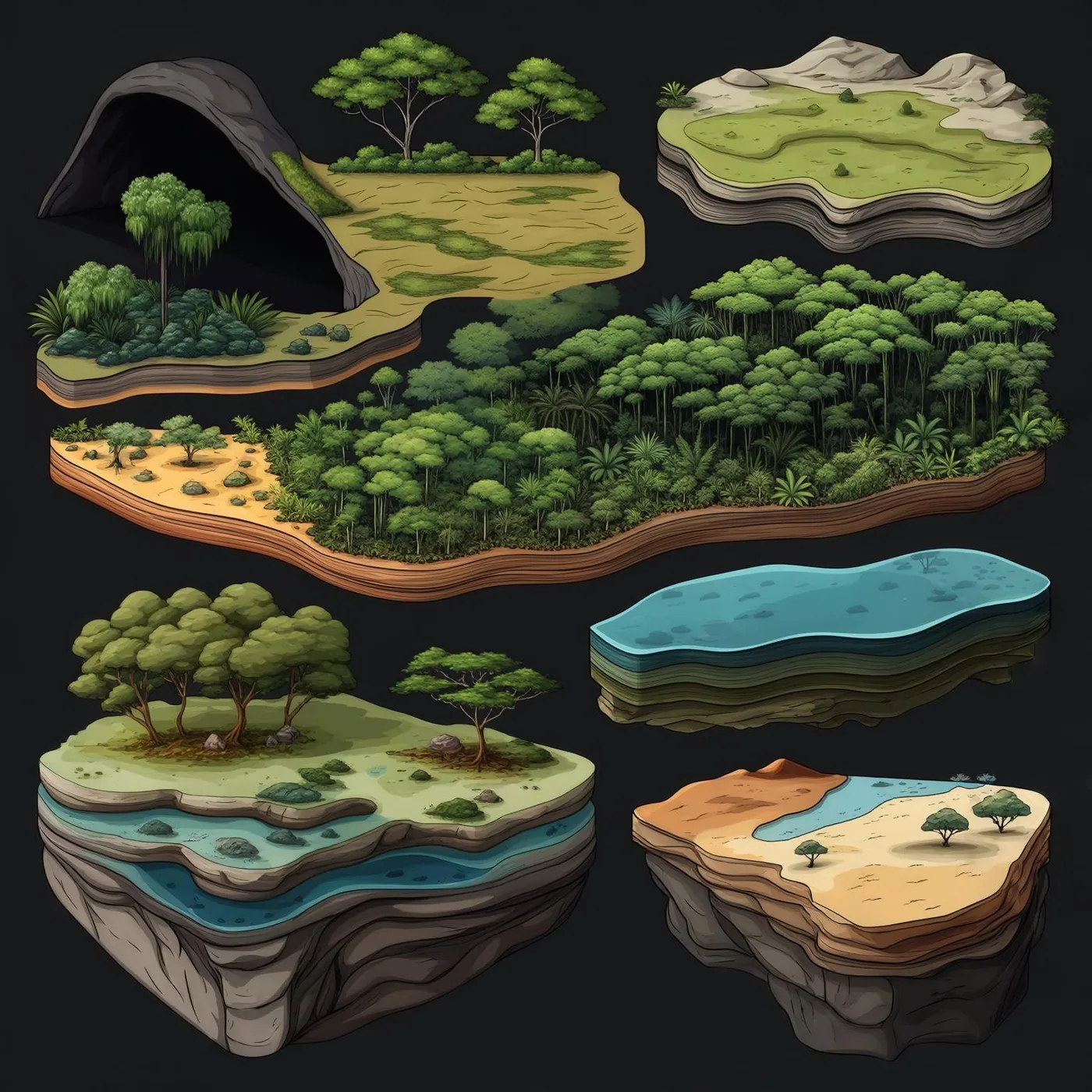
Illustrated layers of cave, wooded, aquatic, and arid terrain

Life does not relate in the same way across a cave, meadow, arid sandscape desert, or reef. Different materials, lifeforms, movements, and timescales make different things easier to notice and work with.

The ecology is not assigned to a leader as a diagnosis. Learning how it actually lives—what moves through it, what it holds, what changes there, and how its relations work—helps you understand the scape a narrative is moving through. You explore what the narrative is doing there, how you are relating within that scape, and what another response may ask of you. An ecological image supports that exploration when intellectual understanding alone has not changed the narrative’s hold.

Four of the fourteen current fields of wonder are open for an encounter here. Each opens one possible inquiry; what emerges depends on the ecology and the situation you bring. Select one to follow its return to a live decision, or see the other ten by name ↓.

01 / 04
The wider ground work

Ten more by name.

The current ground work of fields of wonder includes broad ecological contexts, particular expressions, and relations that cross more than one ecology.

Forested

  • Old-growth boreal forest floor
  • Equatorial jungle

Water-mediated

  • Wetland
  • Delta

Open land

  • Plains
  • Steppe

Cryospheric

  • Cryospheric zone

Across ecologies

  • Riparian zone
  • Mycelial ground
  • Migration path/corridor
Narrative influence

We are all taking things in.

Stories. Expectations. Advice. What success has taught us. What belonging has required. What institutions reward. What earlier experiences taught us to protect.

They travel. They accumulate. They can become the lens through which a consequential situation is understood, shaping what feels possible, risky, or like the obvious move.

ClimeScapes calls these N-otion: narratives in movement or in motion that acquire enough presence and gravitas to orient attention, narrow what can be heard, and give certain directions a sense of necessity.

They travel through what gets repeated, what goes unquestioned, what feels like clarity rather than constraint, and the stories a leader tells about who they are and what they are responsible for.

Topography of Narrowing reads what these N-otions are doing and what keeps giving them authority. P.A.R.D. helps read how the leader is relating with them while a decision forms.

P.A.R.D. Attentional Scape™

How are you relating with what reaches you?

Four relational dynamics can take form anywhere across a ClimeScape. They are not personality traits or stages. Each can be read through any ecology; no ecology belongs to only one dynamic.

01

Permeability

When something affects you, can it change how you understand what is happening and the direction you are considering—without shutting it out or letting one influence decide everything?

02

Resilience

Can you stay with what has been stirred or remains unsettled so your relationship with it can change, without burying it or forcing a quick conclusion?

03

Dexterity

What relationships, perspectives, practices, materials, and other knowledge carriers are changing how you understand and work with what is here?

04

Agility

When what you learn changes what the situation calls for, can that change how you proceed?

All four can be active in the same consequential situation. Different ecologies may make particular aspects easier to work with without becoming assignments for them.

Ecoformmating™

Reading consequence while it is still forming.

Ecoformmating follows how attention and narrative influence become direction while consequence can still be held in view.

IN–FORM–ATION traces what happens to what affects us: what we take in, what changes as we work with it, and how it begins influencing direction. These movements overlap, recur, and can change one another. They are not stages.

Ecoformmating Flow brings this process into a live decision. It does not replace Topography of Narrowing; it follows what happens to influence as it is taken in, worked with, and begins shaping direction.

How a practitioner works with a live decision

Return to the choice while it can still change.

The work does not stay in reflection. It comes back to the live decision and what may need to change.

01 / 06
From capstone to real settings

The ClimeScapes Communal Lab.

A curated development ecology where selected readers of my doctoral capstone help test how the ClimeScapes work shared here can take form in real settings.

They may be researchers, practitioners, designers, strategists, ecological thinkers, organizational and cultural leaders, facilitators, or institutional thinkers who see an overlap with their own expertise or fascinations.

What does ClimeScapes need in order to enter the environments it is meant to serve?

Fidelity

Read the capstone closely and help name what ClimeScapes must preserve as it takes new forms.

Translation / Relational Credibility

Help make the work clear and credible in your field—through language, design, or facilitation—without flattening it.

Application / Real-World Relevance

Bring a real consequential decision or setting where we can test what the work helps people notice and do.

Commercialization

Bring experience building offerings or partnerships that can sustain the work without letting the market write it.

For those readers: Where do your fascinations, expertise, lived experience, or trajectory meet this inquiry? What might you help ClimeScapes reveal, strengthen, translate, test, or protect from dilution?

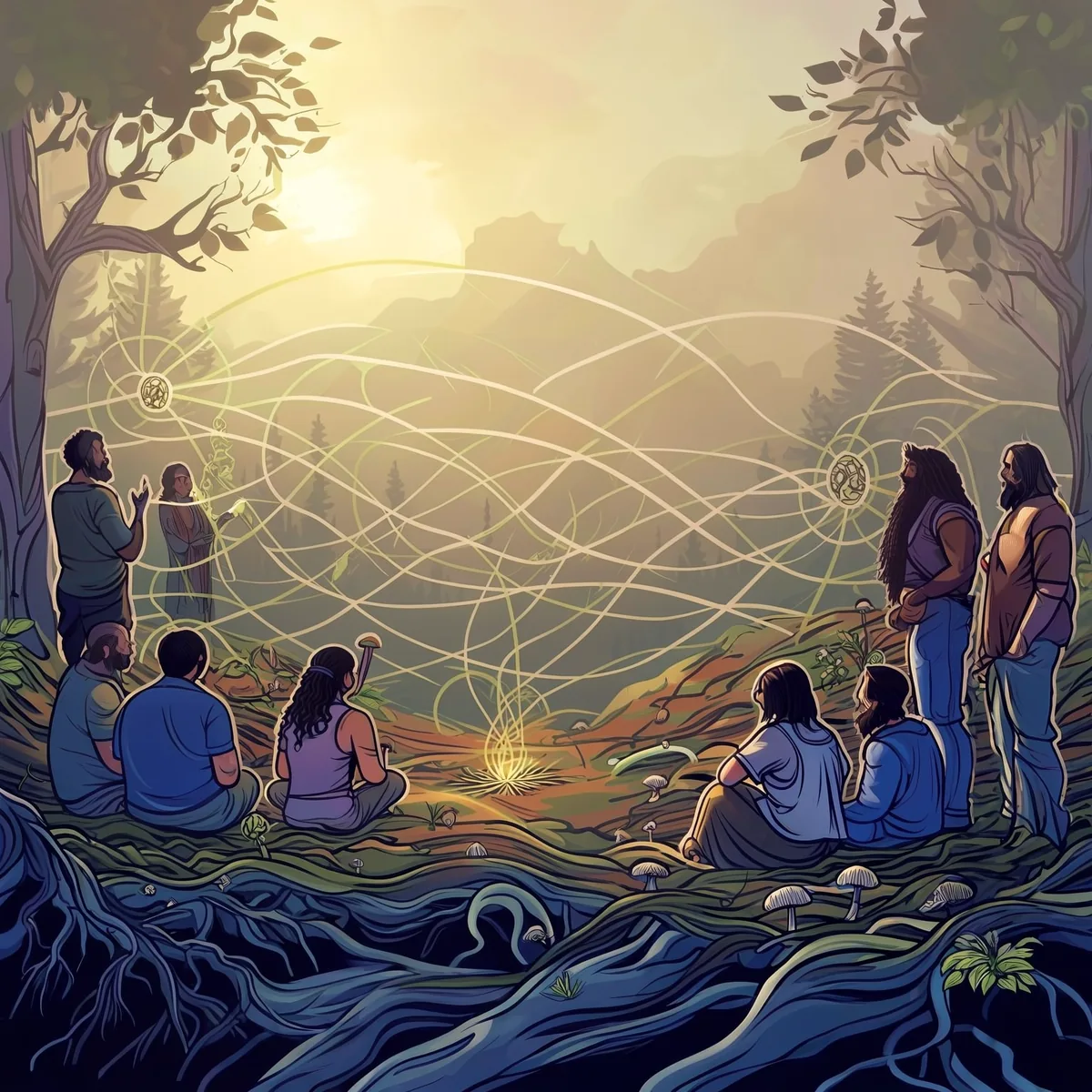
People gathered among forest roots, connected by winding lines
Illustrated portrait of Lohyk Laurent Ba-Ma seated in a vivid ecological landscape
About the founder

Lohyk Laurent Ba-Ma

Practitioner of Ecological Psychology Applied to Leadership & Identity
Catalyst for Ecological Orientation
Climate-Shift Educator in Human Behavior

Lohyk’s work weaves ecological psychology, symbolic literacy, and climate-shift practices to help leaders, communities, and alive beings reconfigure the moments of relating—the climates—that shape participation and trust.

Return to the forming moment

A world regenerates every time a human remembers how to relate.

Begin where a consequential decision is already taking form.

Bring a decision into view ↑